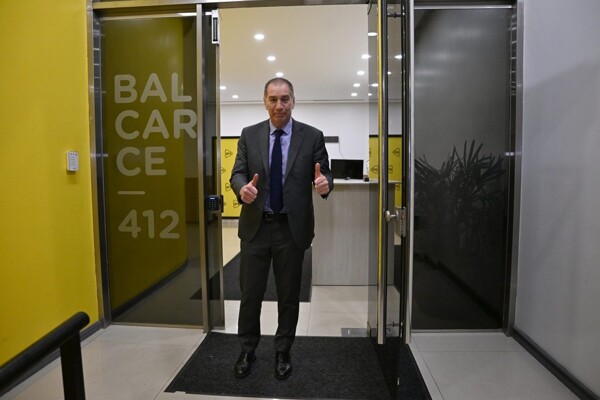
Buenos Aires, Dec 14 (NA) – The head of the La Libertad Avanza (LLA) senators' bloc, Patricia Bullrich, stated this evening that her bloc has 'the decision' to pass the labor reform 'before the end of the year,' and anticipated that they are already in talks with several non-Kirchnerist blocs.
"I have the decision to move this law forward, and with the entire LLA bloc, we are talking to other blocs. The Kirchnerists have already said no, so there is not much to talk to them about, but we are talking to others," Bullrich revealed to Noticias Argentinas agency in an interview on the La Nación+ channel.
Bullrich maintained that this is "a law that has been widely discussed, and we have been talking for 20 years about laws that need to be changed, and in this case, the labor system has changed in the world and must also change in Argentina," she emphasized.
Similarly, she dismissed the possibility that the projected law would cause a deficit in the financing of union social works or ANSES (Social Security Administration), and stated that "it is the opposite."
"The money for social works will grow, because if we formalize the 43% (of workers) who are in the informal sector, each one who formalizes will contribute to the social work that corresponds to them, and then they will have more money, not less," she pointed out.
She added that "there is a 43% in the informal sector and a 30% in the 'gray' sector, and with this law, we lower the contributions so that more can enter the formal sector."
Therefore, she assured that "in this case, it is all gain, more money for pensions, more for social works," she stressed.
Additionally, she questioned the 'solidarity fee' that some unions receive when they negotiate a collective agreement and achieve salary increases, and explained that union membership "in Argentina is voluntary and will continue to be so, which is why there are so few members."
"And as people stopped affiliating, they started to have solidarity fees, which were also signed by the employers, we must also say that, and they are 2, 4, or 5 percent of each worker's salary," she reiterated.
As an example, she mentioned that "a worker under the current law pays a fee for their funeral, but it gets to the point where they pay for their funeral 25 times, it is madness," she said and added that "these fees must be lowered because the money is from the people."